Revenue recognition under ASC 606 and IFRS 15 is where manual schedules turn into restatement risk, exactly when auditors and investors look closest. NetSuite Revenue Management is the part of NetSuite that automates recognition of your actual contracts and rules across products, services, subscriptions, and contracts tied directly to the general ledger. Zanovoy implements and configures it to how your business actually recognizes revenue.

















What It Does

Lets you define and configure recognition rules based on your specific criteria, so revenue is recognized automatically and consistently in line with the guidance rather than calculated by hand.

Handles complex scenarios like multiple deliverables in a single contract, assigning revenue to each element based on fair value or your allocation method, so bundled arrangements are recognized correctly.

Allocates revenue across time periods, entities, departments, and other dimensions based on predefined rules, so recognition reflects how the revenue should actually be spread.

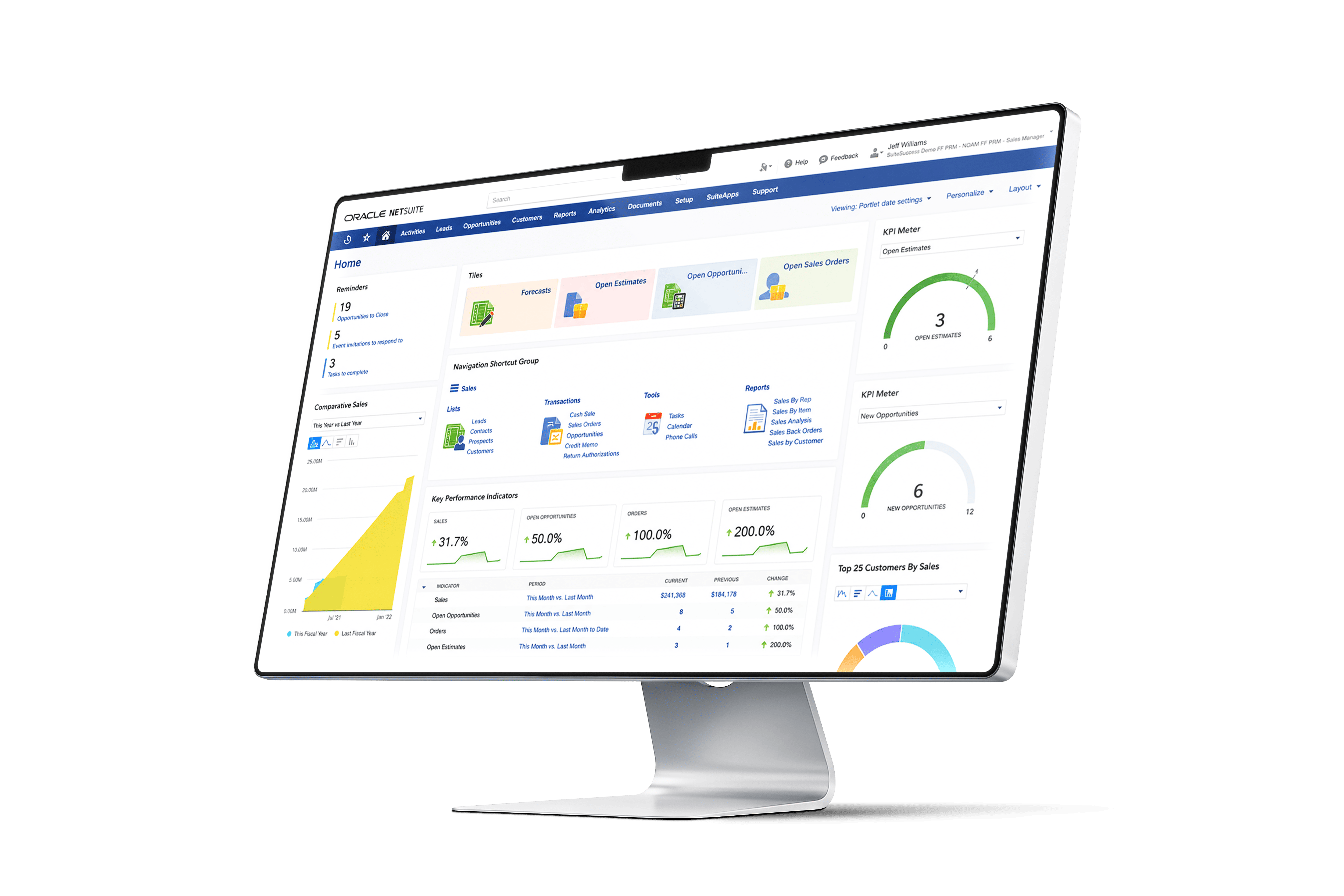
Provides real-time reports, dashboards, and KPIs on revenue trends, profitability, and forecasting, so finance can track revenue performance from live data rather than assembling it after close.

Flows recognized revenue directly into general ledger accounts and financial statements, so revenue data moves into the books automatically and stays consistent across your financial processes.
See how this would run against your actual contracts and rules.
Map This to Your RevenueWhat You Get From It
01
Automating recognition against ASC 606 and IFRS 15 reduces the risk of revenue errors and misstatements, so compliance is built into how revenue is recognized rather than checked after the fact.
02
Automating revenue calculation, allocation, and reporting removes the manual schedules that consume finance time, so the team spends its time on analysis rather than maintaining spreadsheets.
03
Applying predefined rules consistently minimizes revenue leakage and produces a clear audit trail, so the recognized numbers hold up under review.
04
Real-time reporting lets you track revenue by product, customer, region, or any dimension, so revenue performance is visible for decision-making rather than reconstructed at period end.
05
Because recognition runs inside NetSuite, revenue data stays consistent across finance and accounting, with no separate revenue system to reconcile against the general ledger.
Turn manual revenue schedules into recognition that holds up under audit.
Get Your Recognition ScopedWhy Work With Zanovoy on Revenue Management
Revenue recognition is only compliant when the rules, allocation methods, and contract handling match how your business actually earns, and the standards actually apply. Get the configuration wrong, and you have automated the wrong treatment. We lead with that work, from the finance seat, so recognition runs correctly under ASC 606 and IFRS 15 and ties cleanly to the general ledger.
01
We configure your recognition rules, multi-element arrangements, and allocation methods to match how you actually earn revenue and connect it to your financials so recognized revenue flows into the ledger automatically.
02
We support your revenue setup after go-live, so issues in recognition rules or allocation are handled before they reach your close or an audit.
03
We handle the path to NetSuite Revenue Management, so getting recognition automated does not become its own drawn-out project.
04
We configure recognition to your actual contracts, revenue types, and the standards that apply to you, rather than forcing your revenue into a generic template.
05
The people who advise on your revenue setup are the people who implement it, integrate it, and support it afterward.
06
We tune your recognition rules and allocation as your revenue models and contracts evolve, so the module keeps pace with how the business earns.
Turn manual revenue schedules into recognition that holds up under audit.
Get Your Recognition ScopedProfessionals on the Financial Transformation Team
Companies supported through IPO
Implementations delivered across 5 continents
Customizations built for enterprise clients
Integrations built across the platform ecosystem
Continents served
© Copyright 2025, All Rights Reserved by Zanovoy





.png)